
Getting started with the emoney app should not feel risky
If you are comparing digital wallets, prepaid platforms, and mobile payment tools, the real question is not just what the emoney app: Features, Fees, Security & How to Get Started looks like on paper. It is whether the app is practical, affordable, secure, and reliable enough for everyday payments or business use. That matters even more when failed transfers, hidden costs, or weak fraud controls can create real financial damage.
At High Risk Payment Processing, we work with merchants and online businesses that pay close attention to payment risk, approval flow, compliance, and customer trust. That perspective makes it easier to evaluate e-money apps beyond marketing claims and focus on what users actually need: clear fees, strong security, smooth onboarding, and dependable support.
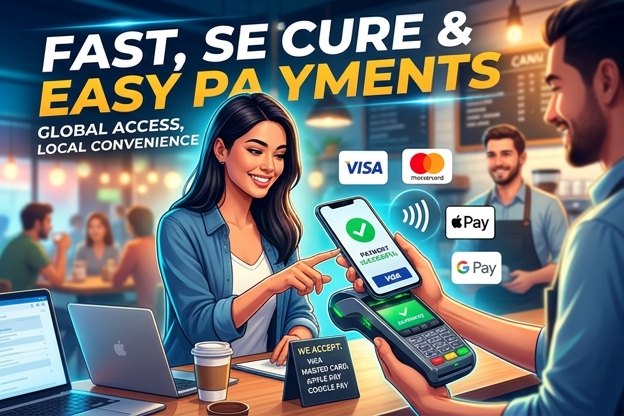
An e-money app is a digital financial application that lets users store value electronically, send and receive money, pay merchants, and sometimes use linked cards or bank transfer features. In simple terms, it acts as a software-based money tool for personal payments, digital commerce, and in some cases cross-border transactions.
The best e-money apps combine speed and convenience with regulated safeguarding, identity verification, and fraud controls. The weaker ones may look simple at first but can become expensive or frustrating once funding limits, transfer fees, and account reviews kick in.
Table of Contents
- What an e-money app actually does
- Core features that matter most
- Fees, limits, and hidden costs to watch
- Security, regulation, and account protection
- Who benefits most from an e-money app
- How to get started the right way
- Comparing common business and user scenarios
- Practical insights from payment risk experience
- Common risks, limitations, and red flags
- Final takeaway and next actions
What an e-money app actually does
An e-money app is not always the same thing as a traditional bank account. In most cases, it stores electronically issued monetary value, allows transactions through an app interface, and connects users to payment rails such as cards, bank transfers, QR payments, or merchant checkout systems. Depending on the provider, users may also get a virtual card, budgeting tools, bill pay, rewards, and business payment options.
The key difference is that many e-money institutions are structured around payments first, while banks are built around deposit accounts and lending. That distinction affects how funds are held, what protections apply, and how quickly the provider can adapt product features. For users, the result is often a faster and more mobile-friendly payment experience, though sometimes with stricter transaction monitoring and lower balance limits.
According to the Federal Reserve’s more recent digital payment trend reporting, consumers continue shifting toward mobile and remote payment behavior, especially for low-friction transactions. Meanwhile, industry reporting from Juniper Research in 2024 projected continued growth in digital wallet usage globally, driven by smartphone adoption and merchant acceptance. That momentum is exactly why users need a more careful framework for evaluating e-money products.
Core features that matter most
Not every feature deserves equal attention. A polished interface helps, but serious users should prioritize the tools that affect daily usability, money movement, and dispute resilience.
Wallet balance and funding options
A useful e-money app should let you load funds in more than one way. Common methods include debit card top-ups, bank transfers, payroll deposits, and peer-to-peer incoming transfers. The best products make funding simple without charging excessive top-up fees.
Peer-to-peer transfers and merchant payments
Most users start with sending money to friends or paying online merchants. Look for speed, transaction transparency, and confirmation detail. A transfer that appears instant but remains pending behind the scenes can cause avoidable problems.
Virtual cards and physical cards
Many e-money apps now issue virtual cards for safer online spending. Some also offer physical cards for ATM access or retail purchases. This matters because a strong card layer can turn a basic wallet into a more complete spending tool.
Spending controls and alerts
Modern apps should include real-time notifications, card freeze options, merchant controls, and transaction categorization. These are not luxury features. They are basic defense tools against fraud and unauthorized use.
International and multi-currency capabilities
If the app supports cross-border use, check exchange rates, transfer fees, and settlement times. Some providers market “global payments” aggressively while adding margins that make each transaction more expensive than expected.
- Fast account setup with identity verification
- Multiple funding and withdrawal methods
- Real-time transaction alerts
- App-based security controls
- Clear fee schedule and limits
- Reliable customer support
Fees, limits, and hidden costs to watch
Fees are where many users misjudge an e-money app. A product can appear cheap during signup and still become costly once you start funding, sending, converting, or withdrawing money.
Common fee categories
Users should review the full schedule for account maintenance, top-ups, card issuance, ATM withdrawals, foreign exchange, expedited transfers, and chargeback-related events. Business users should also look for settlement fees, reserve requirements, or payout minimums where relevant.
Why fee transparency matters more than low headline pricing
Low advertised pricing is not enough. A wallet with a modest monthly fee but transparent transfers can be cheaper than a “free” app that adds conversion spreads and withdrawal costs. According to a 2024 report by Deloitte on digital banking and payment behavior, users increasingly rank transparency and trust alongside convenience when choosing financial apps. That lines up with what we see in payment operations: surprises cost retention.
Limits can be just as important as fees
Some users focus only on pricing and ignore transaction caps, daily withdrawal limits, and account tier restrictions. Those limits can disrupt payroll use, travel spending, or e-commerce payouts at the worst possible moment.
- Check the funding fee for bank transfer, debit card, and credit card loads.
- Review domestic transfer pricing and settlement speed.
- Inspect the foreign exchange markup, not just the stated transfer fee.
- Read the ATM and cash-out policy.
- Confirm whether inactivity, replacement card, or account review fees apply.
Security, regulation, and account protection
Security is where users should slow down. A sleek app and smooth signup flow mean very little if fraud response is weak or safeguarding language is vague.
Safeguarding versus deposit insurance
Many e-money institutions safeguard customer funds in segregated accounts, but that is not always identical to bank deposit insurance. Users need to read how the provider structures fund protection and what happens if the firm fails operationally.
Identity verification and ongoing monitoring
Know Your Customer checks, sanctions screening, and transaction monitoring can feel inconvenient, but they are part of a legitimate compliance framework. According to the Financial Action Task Force guidance updates and industry compliance analysis through 2023 to 2025, digital payment providers face growing pressure to strengthen onboarding and suspicious activity detection. For users, this means more verification requests but often better fraud prevention.
Core security controls to expect
A serious e-money app should support:
- Multi-factor authentication
- Biometric login
- Device recognition
- Encryption for data in transit and at rest
- Instant card freeze and unfreeze
- Suspicious login alerts
- Clear dispute and account recovery procedures
“The strongest payment apps are not just secure at the login screen. They are secure across the entire transaction lifecycle, from onboarding and funding to payout review and dispute handling.”
Visa’s and Mastercard’s public fraud-prevention materials released over recent years also reinforce the same point: layered controls outperform single-point authentication. In plain English, no one feature is enough by itself.

Who benefits most from an e-money app
E-money apps are not equally suited to every user. They are often strongest in situations where convenience, speed, and digital-first control matter more than full-service banking.
Everyday consumers
For budgeting, subscriptions, online shopping, and person-to-person transfers, a good e-money app can be simpler than a traditional bank interface. Real-time notifications and virtual cards are especially useful here.
Freelancers and digital workers
Freelancers often need fast access to incoming funds, low-friction transfers, and clear expense tracking. If the app supports multi-currency holding and reasonable withdrawal pricing, it can be very practical.
Travelers and cross-border users
Users who spend abroad should focus on FX margins, ATM availability, and card acceptance. A travel-friendly app can save money, but only if the exchange pricing is genuinely competitive.
Online merchants and higher-risk businesses
This is where the conversation gets more nuanced. At High Risk Payment Processing, we often speak with businesses that want wallet-based payment flexibility but also need stronger risk management, chargeback awareness, and processor compatibility. An e-money app can help with operational payments, team spending, or customer convenience, but it is rarely a complete substitute for a carefully structured merchant account strategy.
How to get started the right way
Most users can set up an e-money app quickly, but a rushed setup creates problems later. Verification delays, funding failures, and frozen transactions often trace back to small onboarding mistakes.
A clean setup process
- Download the official app from the verified app store listing.
- Create your account using your legal name and a primary email address you control.
- Enable multi-factor authentication immediately.
- Complete identity verification with accurate documents.
- Review fees, limits, and the provider’s safeguarding explanation.
- Link a funding source and make a small test transaction first.
- Set alerts, card controls, and spending preferences before regular use.
What to test before relying on the app
Before moving a larger balance, check funding speed, withdrawal speed, customer support response time, and whether transaction notes and receipts are easy to access. A payment app should be judged in action, not just by app store ratings.
Comparing common business and user scenarios
The right app depends on the use case. The table below shows how evaluation criteria shift across common scenarios.
| User Type | Top Priority | Most Relevant Feature | Biggest Fee Risk |
|---|---|---|---|
| College student | Fast peer payments | Instant transfers and debit top-ups | Instant cash-out charges |
| Freelance designer | Receiving client payments | Multi-currency holding and payout tracking | FX spread on conversion |
| Frequent traveler | Low overseas spend cost | Virtual or physical card with international acceptance | ATM and foreign transaction fees |
| E-commerce merchant | Operational payment flexibility | Team cards, wallet transfers, reporting | Withdrawal holds and account review delays |
| Subscription business | Payment continuity | Recurring payment compatibility and alerts | Failed payment retry fees or chargeback exposure |
Practical insights from payment risk experience
I have seen businesses treat digital payment apps as a shortcut around payment friction, only to create bigger operational issues later. In one case, a subscription merchant approached us after relying too heavily on a wallet-based flow that seemed efficient at first. The app was easy to deploy, but settlement timing became unpredictable during a spike in account reviews, and support response slowed when transaction volume increased.
At High Risk Payment Processing, we helped the business rebuild its payment stack around a more stable merchant processing structure while keeping the wallet app only for controlled secondary use cases such as team spending and vendor reimbursements. That shift reduced confusion, improved reconciliation, and gave the merchant a clearer fraud response process.
In another case, I worked with a digital services operator that wanted an e-money app for faster international contractor payouts. The provider looked attractive because onboarding was quick and the dashboard was clean. But once we compared fee layers line by line, the cross-border conversion cost was much higher than the headline price suggested. We recommended a narrower deployment model and paired it with stricter payout testing. The client kept the convenience while avoiding margin erosion.
“Convenience should be treated as one variable, not the final decision. In payments, the cheapest-looking flow can become the most expensive once disputes, delays, or compliance reviews start.”
Common risks, limitations, and red flags
An e-money app can be excellent for some users and still be the wrong tool in other situations. Balanced evaluation matters.
Potential drawbacks
- Lower balance or transaction limits than a bank account
- Temporary holds during compliance reviews
- Limited dispute handling compared with some card products
- Weak human support during urgent account issues
- Higher costs for FX, ATM use, or premium transfers
Red flags before signing up
Be cautious if the fee page is vague, the legal entity is hard to verify, support channels are buried, or the safeguarding explanation is unclear. Also pay attention to review patterns. A few negative reviews are normal. A repeated pattern of locked funds, opaque account restrictions, or delayed withdrawals deserves serious weight.
Where e-money apps fit best
For many users, the smart approach is not replacing every financial tool with one app. It is using an e-money app for the jobs it handles well, such as controlled spending, online purchases, mobile transfers, and lighter operational payments, while keeping other services for savings, lending, or full merchant processing.
Final takeaway and next actions
The right answer to emoney app: Features, Fees, Security & How to Get Started depends on how you plan to use the app, what fee sensitivity you have, and how much risk tolerance you can accept. Strong e-money apps offer speed, flexibility, and better digital usability than many legacy financial tools. But convenience should never outweigh transparency, security, and support quality.
From the perspective of High Risk Payment Processing, the best next move is to evaluate the app like an operator, not just a casual downloader. Read the fee structure, test the transaction flow, and confirm the provider’s compliance and support standards before you rely on it for larger balances or business-critical activity.
- Start with a small live test instead of moving your full working balance immediately.
- Compare total cost, including FX and withdrawal charges, not just signup pricing.
- If you run a business, separate wallet convenience from your core merchant processing strategy.
References
- Federal Reserve — Ongoing payment studies and consumer payment behavior analysis relevant to digital and mobile transaction trends.
- Juniper Research — Recent forecasts on digital wallet growth and mobile payment adoption through 2024 and beyond.
- Deloitte — Digital banking and payment consumer behavior insights, especially around trust, pricing transparency, and app usage expectations.
- Financial Action Task Force — Guidance shaping digital payment compliance, identity verification, and anti-money-laundering expectations.
- Visa and Mastercard public security resources — Practical fraud prevention frameworks and transaction security guidance.
FAQ
What is an e-money app?
An e-money app is a digital payment application that stores electronic value and lets users send money, receive funds, make purchases, and sometimes access virtual or physical cards. It is usually built for fast, app-based money movement rather than full traditional banking services.
Is emoney app: Features, Fees, Security & How to Get Started mainly for personal use or business use?
It can work for both, but the fit depends on your needs. Consumers often use e-money apps for daily spending and peer transfers, while businesses may use them for controlled payouts, team expenses, or secondary payment functions. For core merchant processing, many businesses still need a more robust setup.
Are e-money apps safe?
They can be very safe if the provider uses strong identity checks, multi-factor authentication, transaction monitoring, and clear safeguarding practices. Safety depends on both the provider’s controls and the user’s habits, such as enabling alerts and avoiding unofficial download links.
What fees should I check before signing up?
Look closely at the total cost of using the app, including:
Funding or top-up fees
Transfer and withdrawal charges
Foreign exchange markup
ATM fees
Inactivity, replacement card, or premium service costs
How do I get started with an e-money app?
Start with the official app, complete identity verification accurately, and make a small test transaction before using it regularly. It also helps to turn on security settings and review the provider’s transaction limits and support options early.
Can an e-money app replace a traditional bank account?
For some users, it can handle many daily payment tasks. Still, it may not fully replace a bank account if you need broader services like lending, higher deposit protection frameworks, complex cash handling, or larger transaction capacity.